How a commercial roof project works, from first call to final walk-through
How a commercial roof project runs in DC, from the first call to the walk-through: survey, written scope, permits, working around tenants, tear-off and install.

Storefronts, churches and mixed-use corners, on buildings where somebody is working downstairs while we are on the roof. We are licensed for it.
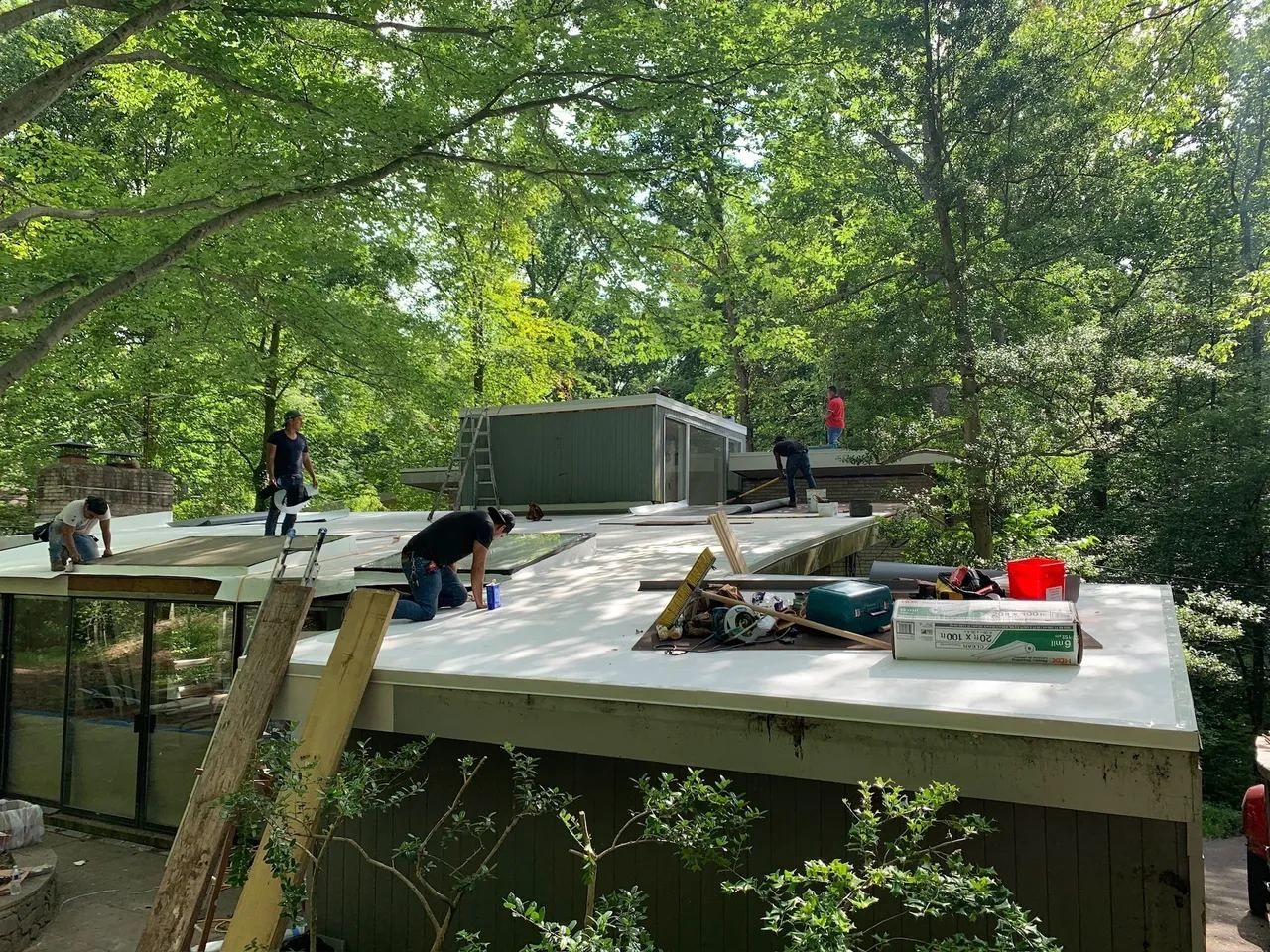
A commercial roof is usually flat or close to it, it carries drains, rooftop units and penetrations a house never has, and there is almost always somebody underneath it: a shop that has to stay open, a congregation that meets on Sunday, tenants in the apartments above a corner store. We plan the roof around them.
Most commercial leaks start where the roof meets something: a parapet wall, a curb under a rooftop unit, a pipe, a drain or a scupper. When the rest of the membrane is sound, those are repairs. We trace the water to where it comes in, fix the cause and give you photos of what we found.
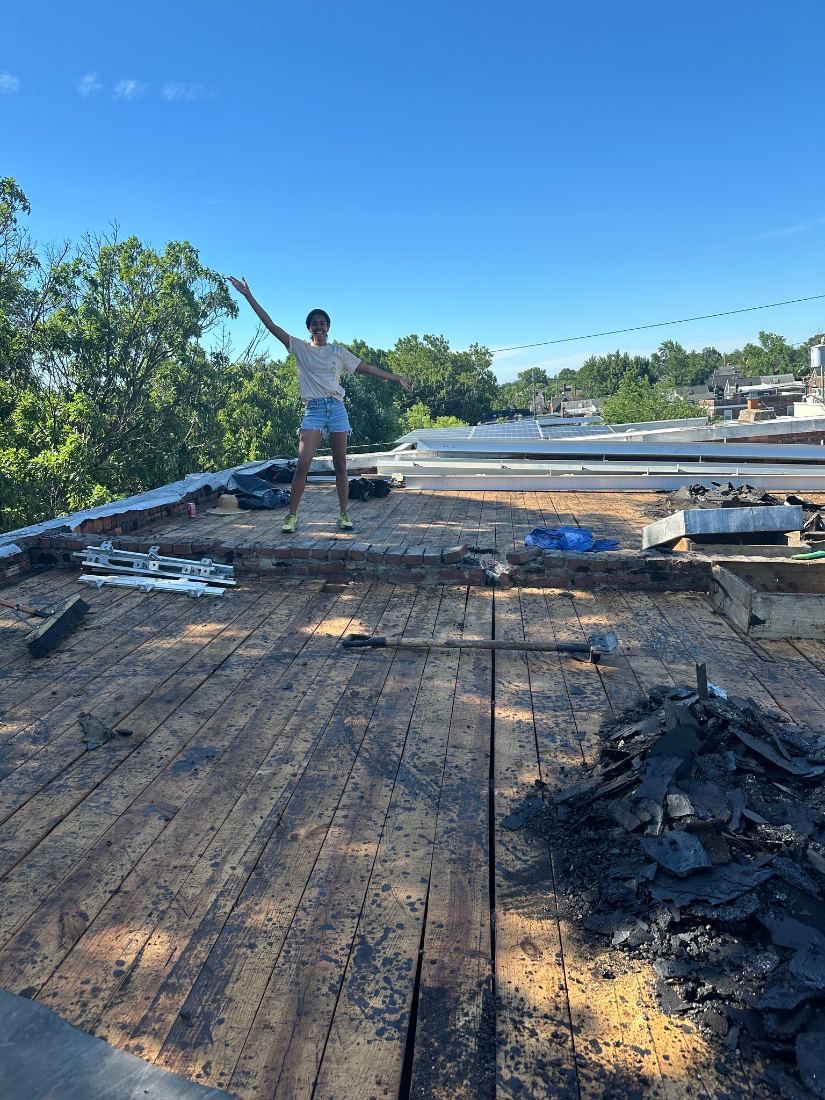
When the membrane is at the end of its life, the insulation underneath is wet, or the building already has two roofs on it, it is time for a tear-off and a new roof. We wrote a step-by-step guide to how a commercial roof project works, from first call to final walk-through. In short:
TPO, EPDM and modified bitumen each fit some roofs better than others. Drainage, foot traffic, rooftop equipment, budget and how long you plan to own the building all point toward one of them. DC also has rules about reflective roofing on low-slope roofs, and the system we quote has to meet them. We tell you what we recommend and why.
We started inside the buildings, as the contracting arm of Brightwood Design+Build, which is how we learned that most of the expensive damage inside starts with an inch of bad detail outside. On a commercial roof, that inch is a parapet flashing, a clogged scupper or a curb nobody sealed, and we look for it first.
Have a commercial roof to look at? Send us the address and a few photos through the estimate form, or call (202) 495-1440. The estimate is free and written.
Yes, and we are licensed for it. Storefronts, churches and mixed-use corners, on buildings where somebody is working downstairs while we are on the roof.
Usually, yes. We plan access, noisy days, odors near air intakes and protection inside with you before the work starts, so the people downstairs can keep working.
We do not publish one, because a price written before anyone has been on the roof is a guess. You get a fixed price in writing after we have seen it, with the scope itemised and the things that could move it named up front.
Both. When the problems are local, a failed seam, a flashing or a drain, a repair is the right answer and it is the one we give.