Roof repair or replacement? How to tell
How to tell whether your roof needs a repair or a full replacement: its age, where the water gets in, what the deck looks like, and what to ask a roofer in DC.

Most DC rowhouses have a flat roof, and so do a lot of mid-century houses. They fail at the seams, the drains and the walls, and those are all things we fix.
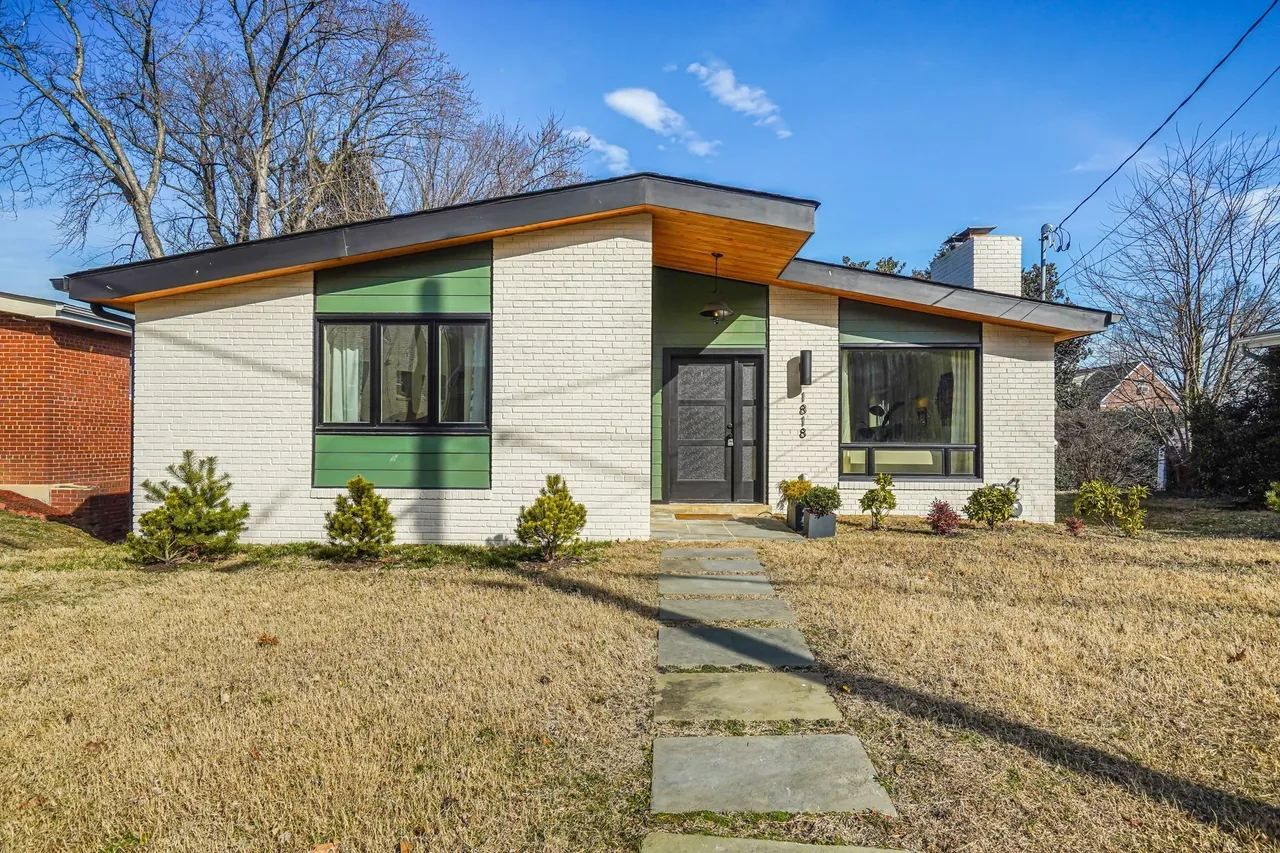
Walk down almost any block in Petworth, Columbia Heights or Capitol Hill and look up: the rowhouses have a parapet in front and a flat roof behind it. Mid-century houses across the city have them too. A flat roof is not a problem in itself. It is a different kind of roof, and it fails in different places.
When the problem is in one place and the rest of the membrane is still flexible, a flat roof is very repairable: a seam rebuilt, a split patched with matching material, new flashing at a parapet or a pipe, a scupper opened up so the water can leave. See roof repair for how a repair works.
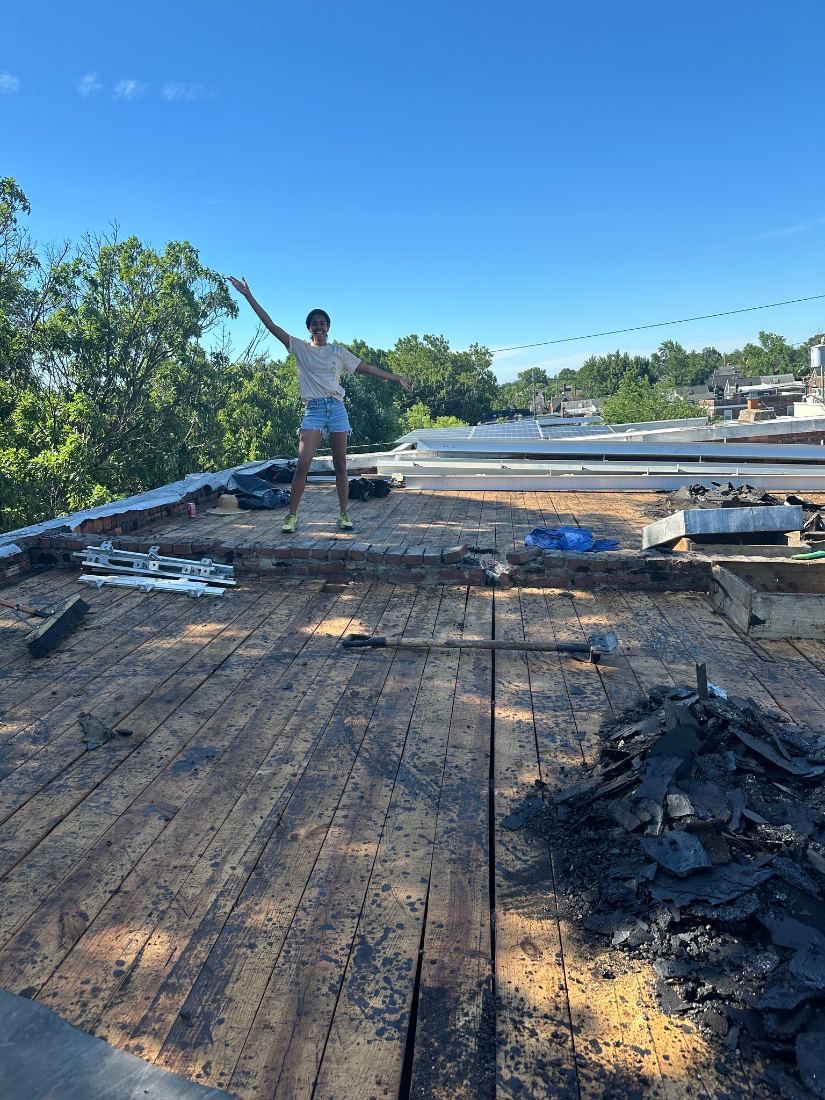
When a flat roof is cracked and brittle across its whole surface, leaks keep coming back, or the deck underneath has gone soft, we replace it: a full tear-off down to the deck, like the one in the photo above, then the new roof.
After the tear-off we walk the whole deck, replace only the boards that are soft, and send you photos before we do. A tear-off is also the moment to fix drainage, with tapered insulation that slopes water toward the scuppers on a roof that ponds.
| System | What it is | Good to know |
|---|---|---|
| TPO | A white single-ply membrane, heat-welded at the seams | Reflective, strong welded seams |
| EPDM | A synthetic rubber membrane | Long track record, flexible in the cold |
| Modified bitumen | Asphalt-based sheets in two or more plies | Tough and repair-friendly, common on older rowhouses |
DC has rules about reflective roofing on low-slope roofs, so the system we quote has to meet them. We explain what we recommend for your roof and why.
It helps to know roughly how old the roof is, where the water shows up inside, and whether it leaks in every rain or only in heavy ones. A photo from a back window or a neighbor’s deck helps too. If you are deciding between a repair and a new roof, read how to tell which one you need.
Flat roof leaking or near the end? Send photos through the estimate form or call (202) 495-1440 for a free, written estimate.
There is no single best; there is a best fit for the roof. Drainage, foot traffic, what is on the roof and the budget all point toward one or another, and we explain why we recommend the one we do.
Roughly 15 to 30 years depending on the membrane, how it was installed and how well the roof drains. Water that stands for days after every rain shortens that a lot.
A little water for a few hours after rain is normal. Puddles still there two days later mean the roof is not draining, and that standing water ages the membrane and finds every weak seam.
Often, yes. A failed seam, a blister or the flashing at a parapet wall is a repair. A membrane that is brittle and cracked across the whole roof, or a soft deck underneath, is a replacement.