A roof leaking after heavy rain or snow is stressful, and the first hour matters most. Here is what to do when your roof is leaking in Washington, D.C., where roof leaks usually start, and when to call a roofer.
1. First, make sure it’s safe
If the ceiling is sagging, cracking or bulging, keep everyone out of that room. If water is near outlets, lights or anything electrical, stay away from it and don’t touch the switches. Your safety comes before your floors.
2. Move your things and catch the water
Move furniture, rugs and electronics away from the leak. Put buckets, trash cans or any container under the drip, and lay old towels around it. Empty the containers before they overflow.
3. Take photos of everything
Take photos and short videos of the leak, the ceiling and anything that got wet. Write down the date and when you first noticed it. This helps the roofer find the cause, and it is useful if you decide to contact your insurance company.
4. Check the attic, if you can do it safely
If you have an attic you can walk into, bring a flashlight and look for wet wood, damp insulation or drips. The spot where water gets in is often higher up than the stain on your ceiling. Make a note of what you see.
5. Stay off the roof
Wet or icy roofs are slippery, and no leak is worth a fall. State Farm’s guide on roof leaks also recommends calling a roofing specialist to find where the water is coming in.
Where roof leaks usually start
A leaking roof does not always mean the whole roof is bad. Leaks often start at a few weak spots:
- Around the chimney, where the metal flashing can lift or rust
- Around vent pipes, where the rubber seal cracks with age
- Where a porch or addition meets the house
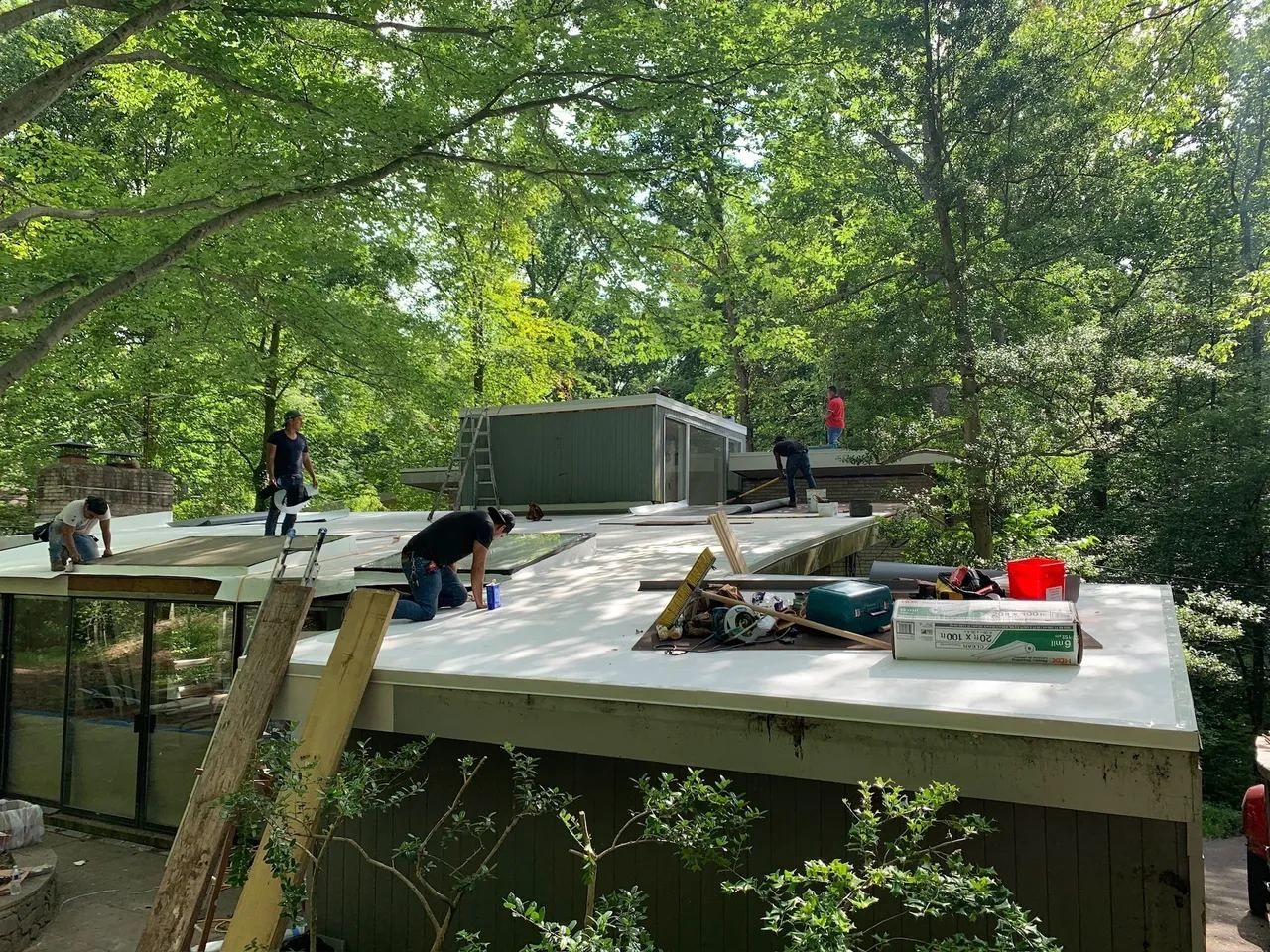
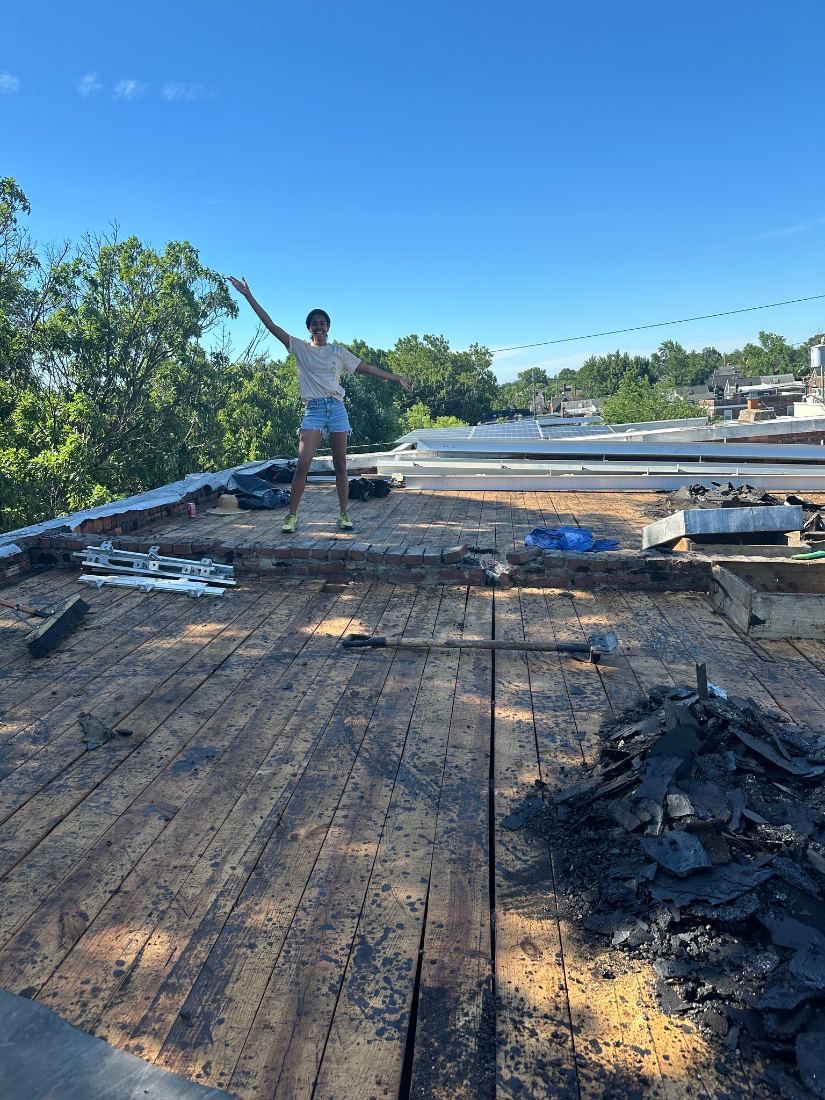
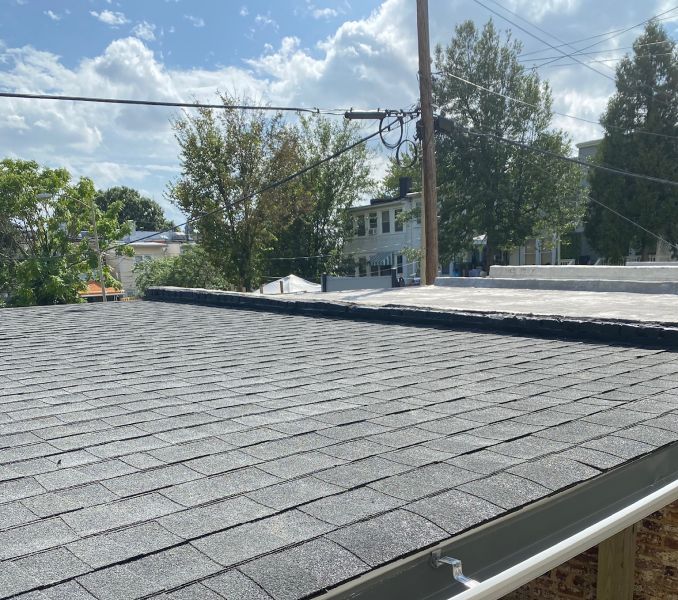
- On flat roofs, common on D.C. row houses, where water can pool and find small cracks
- At the edge of the roof in winter, when melting snow refreezes into an ice dam
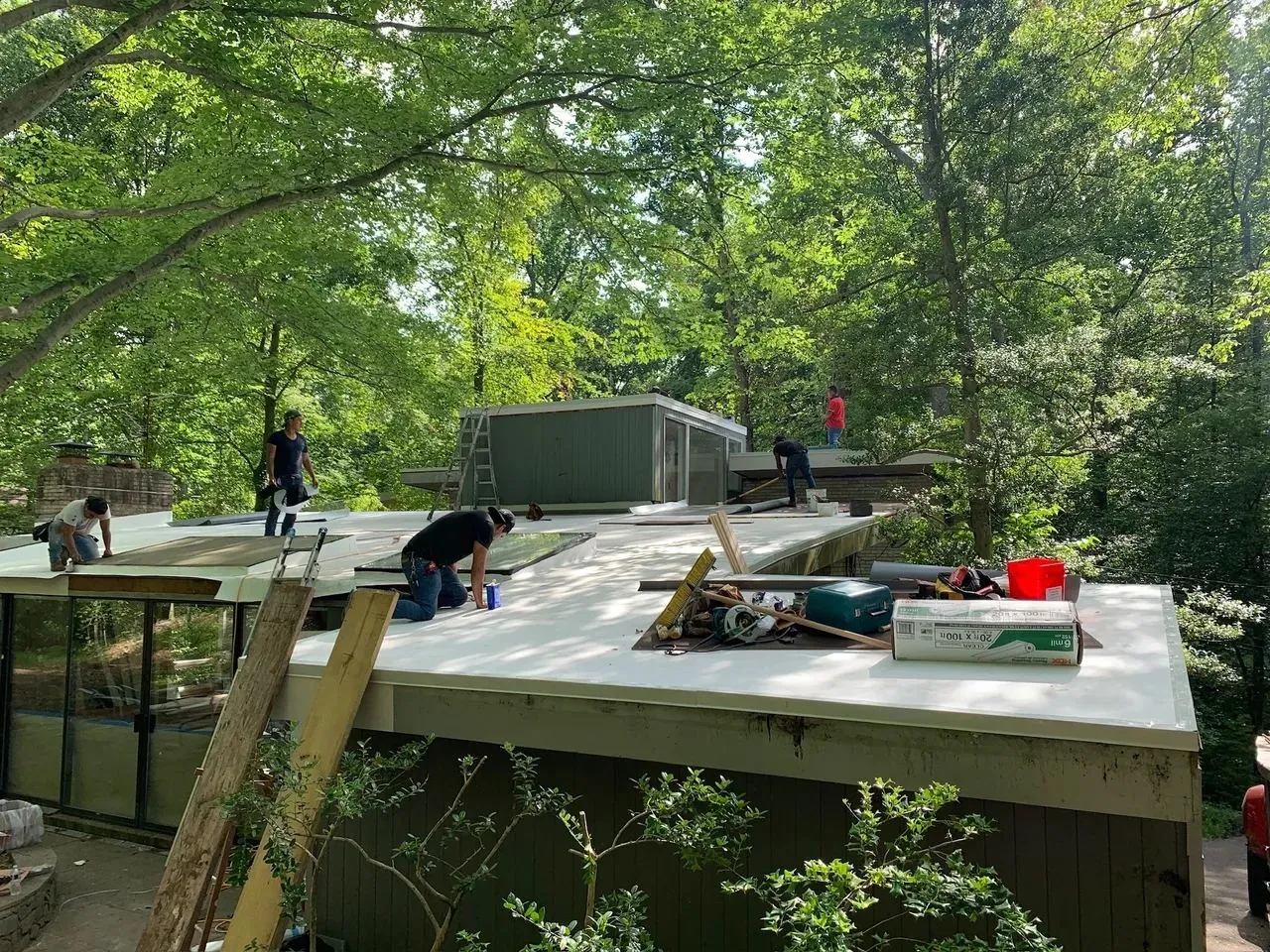
Flat roofs can hold water after heavy rain.
Is a small roof leak an emergency?
Maybe not tonight, but it should not wait. A small roof leak can soak insulation and wood for weeks before a stain shows up, and the damage behind the ceiling keeps growing. Have it checked soon, even if it only drips once in a while.
Why does my roof only leak in heavy rain?
When a roof leaks after heavy rain but not light rain, the water is usually reaching a gap that only gets wet when there is a lot of it: worn flashing, a cracked vent seal, a clogged gutter that overflows, or wind pushing rain under the edge of the roof. It is still a roof leak, and it usually gets worse.
Who do I call for a roof leak?
Call a roofer. A roofer can find where the water gets in, which is often not right above the stain, and tell you whether it needs a repair or something bigger.
If you have a roof leak in Washington, D.C., our team at Overall Roofing can take a look. Tell us what you’re seeing in the form below and we’ll get back to you to set up your free estimate.
Roof leak in D.C.? Let's take a look.
- Free estimate
- Local D.C. team
- Homes and commercial buildings
To help prevent the next leak, start with our winter roof maintenance checklist.